Category Archives: Uncategorized
To suppose
Contact Sammy on WhatsApp 07081599255


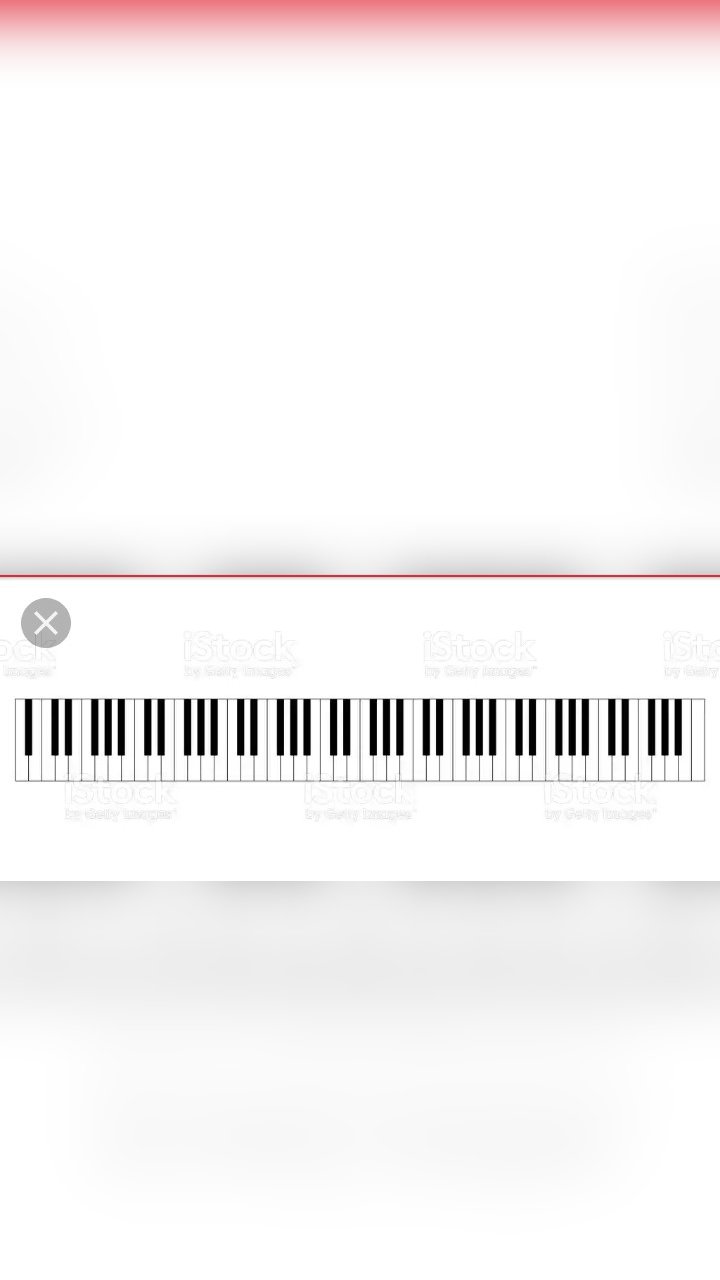
Chromatic scale Skip to content  Menu A Guide To The Chromatic Scale Last Updated on 12th July 2021 by Dan Farrant There are lots of different types of scales in music. Some have seven notes, some have five, some sound happy and some sound sad. But, there is one type of scale that uses all twelve pitches in western music called the chromatic scale. In this post, we’re going to take a look at what a chromatic scale is as well as some of the rules around how to properly notate it. Table of Contents What is a chromatic scale? Put simply, a chromatic scale is all twelve notes arranged in ascending or descending order of pitch. It’s made up entirely of semitones (half steps) with each note being a semitone above or below the last note. On a piano that means playing all the white notes and all the black notes in order of pitch like this:  C chromatic scale Here is an ascending chromatic scale, starting on C written out on a stave: C chromatic scale ascending  And here is a descending chromatic scale starting on C: C chromatic scale descending  But, you can start a chromatic scale on any note, just play the note one semitone (half step) higher until you reach the starting note an octave above. To descend you play the note one semitone (half step) lower until you reach your starting note. What Does Chromatic Mean? The word chromatic comes from the Greek word “chroma” which means colour. We use the word chromatic as it allows us to add colour and embellish the notes of major and minor scales.  During the 1600s, music was generally written in major and minor keys. Composers used notes outside of these keys (accidentals) to embellish the melody and add colour to the music. This is why we call them chromatics as they bring colour and emotion to the music without changing the key centre. From the 19th century onwards composers wanted to get away from writing music in a given key which led to chromatics being used more and more and gave rise to atonal music, which doesn’t have any sense of tonality.  How to Notate a Chromatic Scale? Unlike most music scales which have only one correct way to notate them, you can write a chromatic scale in a number of different ways. For example, you could start a chromatic scale with the notes C, C sharp and D:  But you could also notate it with the notes C, Db followed by D natural:  Both of these are okay but there are few rules and conventions to follow.  Ascending and Descending Chromatic Scales The first thing to mention is that it’s common to use sharp signs when writing an ascending chromatic scale: Ascending chromatic scale And then use flat signs when writing a descending chromatic scale: Descending chromatic scale In practice, composers will write in the most convenient way taking in to account any notes in the key signature as well.  But, in the context of music theory exams, there are two rules that you must follow when writing a chromatic scale which are: You must have at least one note on every pitch You must not have more than two notes on any pitch I’ll explain what I mean by these two rules with some examples. One Note on Every Pitch It’s really important when notating a chromatic scale to have at least one note on every single pitch. You don’t want to be skipping notes.  For example, you could write a chromatic scale like this which if you were to play it would be a chromatic scale.  But if you look closely, you’ll see that there is no note on the pitch E so this would be incorrect, especially in a music theory exam. Make sure that you have at least one note on every line and space of the stave. No More Than Two Notes on any Pitch The other rule to follow when notating chromatic scales is that you must not have more than two notes on any one pitch.  This is best shown in another example. Below we have another chromatic scale starting on C which if you were to play, would sound a chromatic scale.  But this would be another incorrect way of writing a chromatic scale as it has more than two types of the pitch C. It starts on C, then C sharp followed by C double sharp. Make sure you don’t have more than two notes on any one pitch. Chromatic Solfege Solfege is the system that we use to name each of the syllables in a major scale.  If you’ve seen the film the sound of music you’ll know them: Do – Re – Mi – Fa – Sol – La – Ti – Do  Do Re Mi from The Sound Of Music  But what about the syllable names of the chromatic notes? For this we have to add some other syllables which when ascending are: do di re ri mi fa fi sol si la li ti do. When descending we then use the following syllables: do ti te la le sol se fa mi me re ra do Watch the video below to hear how this sounds.  Chromatic Solfege Scale  Examples of the Chromatic Scale in Classical Music There are lots of examples from classical music where composers have used chromatic scales to add colour and emotion. Below I’ve listed a few of my favourite examples of music that uses chromaticism. Etude Op 25 No.6 – Chopin A great example of using the chromatic scale in classical music is this fantastic piece by Chopin.  It uses chromatic thirds to create a really interesting sound. Check it out below.  Etude Op 25 No.6 – Chopin  Fantasia in D Minor – Mozart Another good example of chromatic scales is Mozart’s Fantasia in D minor. At 3:20 you’ll here a cadenza followed by an ascending chromatic scale into the next section.  Fantasia in D Minor – Mozart  Flight of the Bumblebee – Rimsky-Korsakov Another very famous piece is The Flight of the Bumblebee by Rimsky Korsakov. Here it is arranged for piano and as you’ll see it uses a tonne of chromaticism.  Flight of the Bumblebee – Rimsky-Korsakov  Summing up Chromatic Scales I hope that helps make a bit more sense of chromatic scales in music theory. They’re a really important scale to learn and come up a lot in music and theory exams so it’s definitely worth learning about them.  If you have any questions that I haven’t covered, post a comment below and I’ll do my best to answer! Search for:  Welcome to Hello Music Theory! I’m Dan and I run this website. Thanks for stopping by and if you have any questions get in touch! Recent Posts 9 of the Greatest Polish Composers of all Time 10 of the Greatest Czech Composers of all Time 10 of the Greatest Greek Composers of all Time 10 of the Greatest Italian Composers of All Time 10 of the Greatest Hungarian Composers of all Time Featured Posts  The 5 Best Music Theory Courses in 2021  The 10 Best Music Theory Books in 2021 Sign up for our Newsletter Sign Up Popular Pages LearnStudy GuidesPractice PapersWorksheetsCourses About Us About usContactFAQsJobsReviews Site Information AffiliatesDisclaimerPrivacy PolicyRefund PolicyTerms of Use © Hello Music Theory 2021 | Sitemap Update Privacy Settings Exclusive Member of Mediavine Food
6 Ways WordPress.com Courses Help You Grow
Time signature
Time Signature
Introduction

The time signature (also known as meter signature, metre signature, or measure signature) is a notational convention used in Western musical notation to specify how many beats (pulses) are to be contained in each bar and which note value is to be given one beat. In a musical score, the time signature appears at the beginning of the piece, as a time symbol or stacked numerals, such as or 3/4 (read common time and three four time, respectively), immediately following the key signature or immediately following the clef symbol if the key signature is empty.

Simple example of a 3/4 time signature: here there are three (3) quarter-notes (4) per measure.
Time signatures consist of two numerals, one stacked above the other:
- The lower numeral indicates the note value that represents one beat (the beat unit).
- The upper numeral indicates how many such beats there are grouped together in a bar.
For instance, 2/4 means two quarter-note (crotchet) beats per bar—3/8 means three eighth-note (quaver) beats per bar.
There are various types of time signatures, including: simple (such as 3/4 or 4/4), compound (e.g., 9/8 or 12/8), complex (e.g., 5/4 or 7/8), mixed (e.g., 5/8 & 3/8 or 6/8 & 3/4), additive (e.g., 3+2+3/8), fractional (e.g., 2½/4), and irrational meters (e.g., 3/10 or 5/24).
Simple Time Signatures

Basic time signatures: 4/4, also known as common time (); 2/2, also known as cut time or cut-common time (); plus 2/4; 3/4; and 6/8.

Basic time signatures: 4/4, also known as common time; 2/2, also known as cut time or cut-common time (cut time); plus 2/4; 3/4; and 6/8.
The most common simple time signatures are 2/4, 3/4, and 4/4.
Notational Variations in Simple Time
The symbol is sometimes used for 4/4 time, also called common time or imperfect time. The symbol is derived from a broken circle used in music notation from the 14th through 16th centuries, where a full circle represented what today would be written in 3/2 or 3/4 time, and was called tempus perfectum (perfect time). The symbol is also a carry-over from the notational practice of late-Medieval and Renaissance music, where it signified tempus imperfectum diminutum (diminished imperfect time)—more precisely, a doubling of the speed, or proportio dupla, in duple meter. In modern notation, it is used in place of 2 and is called alla breve or, colloquially, cut time or cut common time.
Compound Time Signatures
In compound meter, subdivisions of the main beat (the upper number) split into three, not two, equal parts, so that a dotted note (half again longer than a regular note) becomes the beat unit. Compound time signatures are named as if they were simple time signatures, in which the one-third part of the beat unit is the beat, so the top number is commonly 6, 9 or 12 (multiples of 3). The lower number is most commonly an 8 (an eighth-note): as in 9/8 or 12/8.
Example
3/4 is a simple signature that represents three quarter notes. It has a basic feel of (Bold denotes a stressed beat):
one two three (as in a waltz)
Each quarter note might comprise two eighth-notes (quavers) giving a total of six such notes, but it still retains that three-in-a-bar feel:
one and two and three and
6/8: Theoretically, this can be thought of as the same as the six-quaver form of 3/4 above with the only difference being that the eighth note is selected as the one-beat unit. But whereas the six quavers in 3/4 had been in three groups of two, 6/8 is practically understood to mean that they are in two groups of three, with a two-in-a-bar feel (Bold denotes a stressed beat):
one and a, two and a
or
one two three, four five six
Beat and Time
Time signatures indicating two beats per bar (whether they are simple or compound) are called duple time; those with three beats to the bar are triple time. To the ear, a bar may seem like one singular beat. For example, a fast waltz, notated in 3/4 time, may be described as being one in a bar. Terms such as quadruple (4), quintuple (5), and so on are also occasionally used.
Actual Beat Divisions
As mentioned above, though the score indicates a 3/4 time, the actual beat division can be the whole bar, particularly at faster tempos. Correspondingly, at slow tempos the beat indicated by the time signature could in actual performance be divided into smaller units.
Interchangeability, Rewriting Meters
On a formal mathematical level, the time signatures of, for example, 3/4 and 3/8 are interchangeable.

3/4 equals 3/8 time at a different tempo
In a sense, all simple triple time signatures, such as 3/8, 3/4, 3/2, etc.—and all compound duple times, such as 6/8, 6/16 and so on, are equivalent. A piece in 3/4 can be easily rewritten in 3/8, simply by halving the length of the notes. Other time signature rewritings are possible: most commonly a simple time signature with triplets translates into a compound meter.

12/8 equals 4/4 time at a different tempo and requires the use of tuplets
Though formally interchangeable, for a composer or performing musician, different time signatures often have different connotations. First, a smaller note value in the beat unit implies a more complex notation, which can affect ease of performance. Second, beaming affects the choice of actual beat divisions. It is, for example, more natural to use the quarter note/crotchet as a beat unit in 6/4 or 2/2 than the eight/quaver in 6/8 or 2/4. Third, time signatures are traditionally associated with different music styles—it might seem strange to notate a rock tune in 4/8 or 4/2.
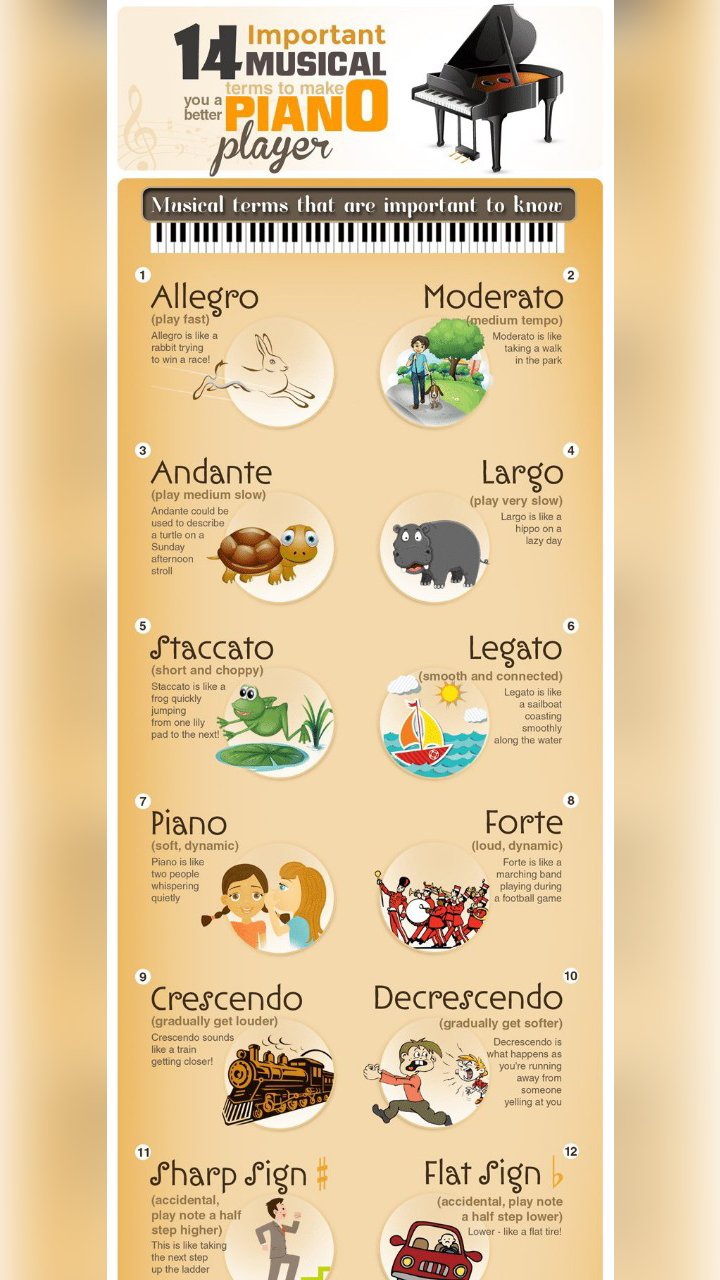
Important music terms

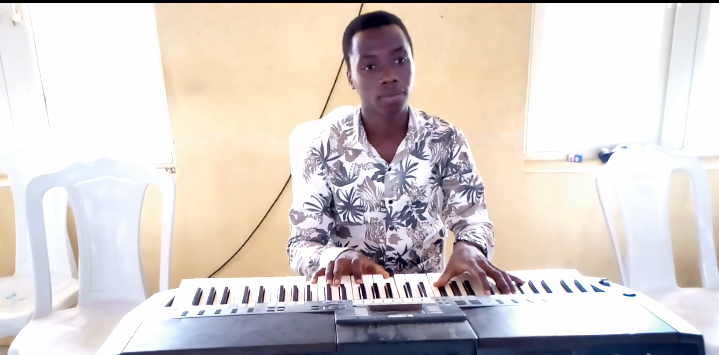
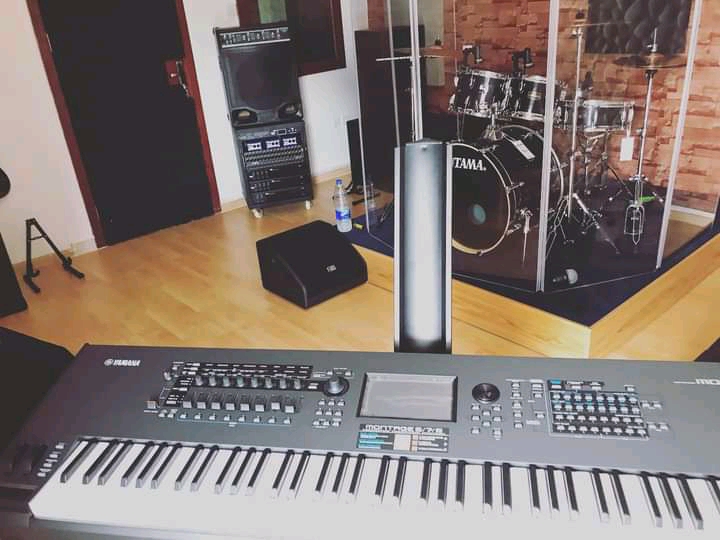

Improves mood. Studies show that listening to music can benefit overall well-being, help regulate emotions, and create happiness and relaxation in everyday life.
Reduces stress. …
Lessens anxiety. …
Improves exercise. …
Improves memory. …
Eases pain. …
Provides comfort. …
Improves cognition.
SammyGrace…
 music and science